If you sell your Denton County home this fall, you pay the property taxes for the part of 2026 you owned it, and the buyer pays for the rest. The title company splits the bill by the day at closing, so you don't have to settle it with the buyer yourself. Because the 2026 bills went out in October and aren't due until January 31, how that split shows up on your closing statement depends on whether the bill has been paid yet. Here is how property taxes work when you sell, in plain English.
Why property taxes come up when you sell in the fall
Texas property taxes are paid in arrears. The bill for 2026 covers all of 2026, but it is mailed in October and is due by January 31, 2027. The Denton County Tax Office says taxes are due when you receive the statement and become delinquent if they are not paid by January 31.
If you close between now and the end of January, that 2026 bill has to be handled. Under Texas law, taxes follow the property, as the Dallas County Tax Office explains, which is why title companies make sure it is handled at closing.
How property taxes are split when you sell a house in Texas
Most Denton County sales use the Texas Real Estate Commission (TREC) resale contract. Paragraph 13 of that contract says current-year taxes are prorated through the closing date. That just means divided by the day: you pay for the days you owned the home, and the buyer pays for the days after.
Here is a simple example with made-up, round numbers:
- Your 2026 tax bill is $9,000, or about $24.66 a day.
- You close on November 20, 2026. You owned the home for 324 days of the year.
- Your share: about $7,990. The buyer's share: about $1,010 for the last 41 days.
Your real numbers come from your own bill, which you can look up on the Denton Central Appraisal District website, and your title company does the math for you.
If the bill is not paid yet, or already paid
The split is the same either way. What changes is which direction the money moves on your closing statement.
If the 2026 bill has not been paid by closing, it usually goes one of two ways, depending on your contract and title company:
- The title company pays the whole bill at closing out of your proceeds, and the buyer credits you for their share (the $1,010 in our example).
- Or you credit the buyer for your share (the $7,990), and the buyer pays the full bill by January 31. The TREC contract says that if taxes are not paid at or before closing, the buyer pays them for the current year.
If the bill has already been paid, by you or by your mortgage company out of escrow, the buyer reimburses you for their share on the closing statement.
Watch for double payments. If your mortgage company pays the bill from escrow after the title company has already paid it at closing, the county gets paid twice. Denton County says that for a duplicate payment no action is needed: a refund check goes to whoever sent the extra payment about 30 days after it is applied. Separately, once your loan is paid off, federal rules require your servicer to refund any money left in your escrow account within 20 business days. Keep your forwarding address current so those checks find you.
Want to know what you would actually walk away with? Taxes are just one line on the closing statement.
Get your free home value report to see what homes like yours have actually sold for, and we will put together a net sheet with your tax proration, payoff and closing costs.
Closing in January? Two tax years are in play
If you close in January 2027, the math changes a little:
- The 2026 bill is all yours, since you owned the home all year. If it is still unpaid, it is normally paid out of your proceeds at closing.
- 2027 taxes are estimated. The 2027 bill won't exist until next fall, so the title company usually estimates it from the 2026 bill. You credit the buyer for the days you owned the home in 2027.
- The estimate can be trued up later. The TREC contract says that if the actual taxes turn out different, buyer and seller adjust between themselves when the bill comes out.
What happens to your homestead exemption when you sell
Your 2026 bill already reflects your homestead exemption, and that discounted bill is the one that gets split. Your exemption does not move to the buyer for future years. The buyer files their own application with the appraisal district.
For your next home, Texas law since 2022 lets you apply for a homestead exemption in the same year you buy, as long as the previous owner did not already have one on that home that year. If you are 65 or older, ask the appraisal district about transferring your tax ceiling. It moves as a percentage, not a dollar amount, as Collin CAD explains. Check with the appraisal district or a tax professional before counting on any savings.
Buying in Denton County after you sell? Our post on your first Denton County property tax bill after buying covers the other side of the table.
What this looks like in Corinth and Oakmont
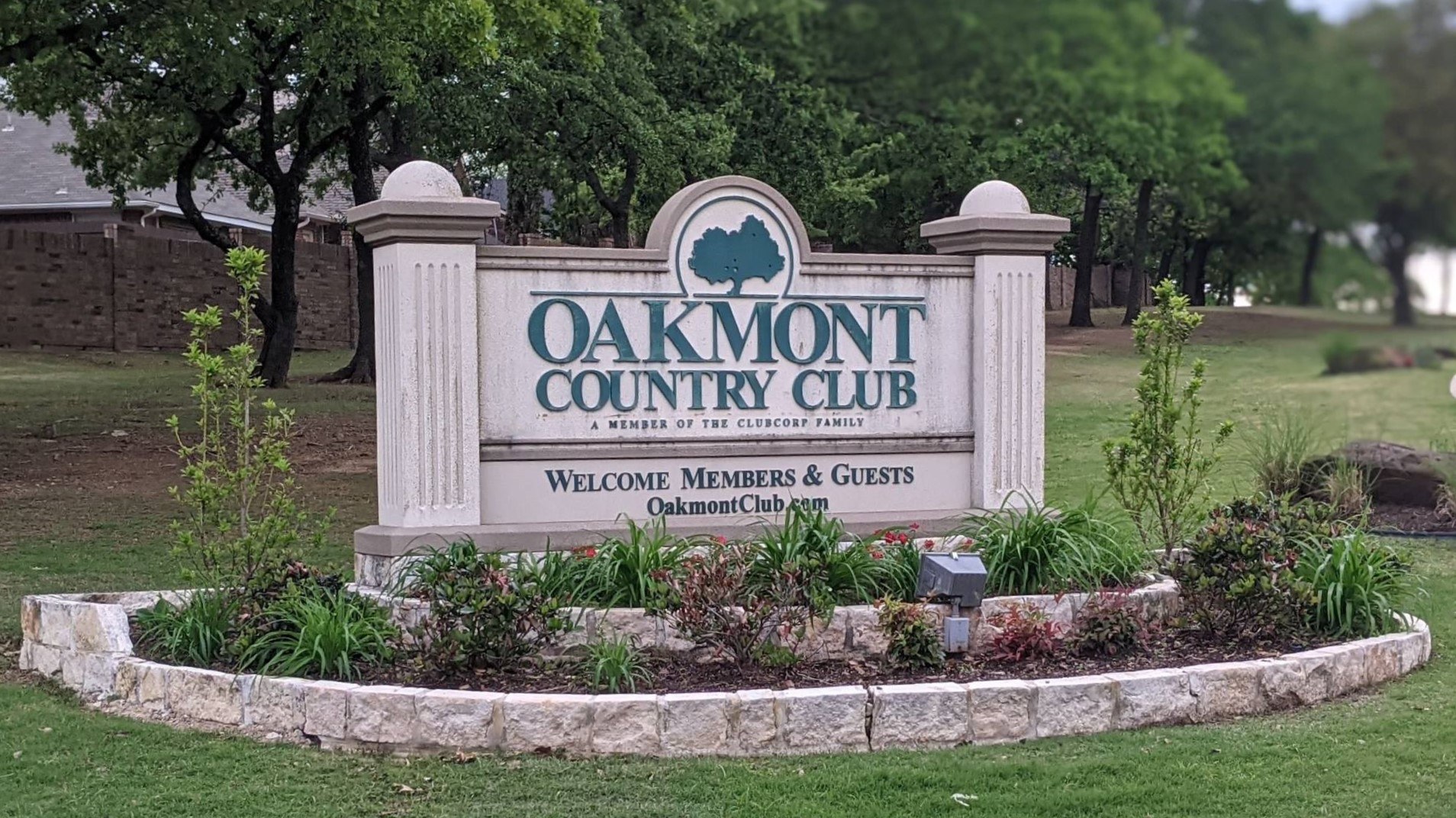
- Check which taxing units are on your bill. A Corinth home is taxed by Denton County, the city and a school district, and Corinth is split between school districts. Oakmont Country Club Estates crosses the Corinth and Denton city limits, so two neighbors can have different city rates. Your DCAD account lists every unit and rate.
- Taxes are a big line on a typical Corinth sale. As of October 18, 2026, about 137 single-family homes were listed in Corinth, with an average list price near $501,500, based on live MLS data. On a home in that range, your tax share can run several thousand dollars, so we put it on your net sheet from day one. See what is for sale and under contract in our Corinth market report.
- Over-65 exemptions matter. If you have one, your 2026 bill is lower, and so is your share at closing. Ask about moving your ceiling before you buy your next home. Our Oakmont Country Club Estates guide breaks down each neighborhood.
For the full picture on listing options, see our guide to selling your Denton County home.
Frequently asked questions
Who pays property taxes when you sell a house in Texas?
Both of you. Under the standard TREC contract, current-year taxes are prorated through the closing date: the seller pays for the days they owned the home and the buyer pays for the rest of the year. The title company handles the split on the closing statement.
I already paid this year's taxes. Do I get money back when I sell?
Yes. If the bill was paid before closing, by you or your mortgage company from escrow, the buyer credits you at closing for the days after the closing date. Any money left in your escrow account is refunded by your servicer after the loan is paid off.
Does my homestead exemption transfer to the buyer?
No. Your exemption is already built into this year's bill, which is what gets split at closing, but the buyer must file their own homestead application for future years. You can apply for an exemption on your next home once you buy it.
What if my mortgage company and the title company both pay the tax bill?
Denton County treats it as a duplicate payment. No action is needed: the tax office mails a refund to whoever sent the extra payment about 30 days after it is applied.
This post explains how property tax prorations generally work for Denton County home sales as of October 2026. It is general information, not tax or legal advice. Your contract, title company and tax situation may differ, so talk with your title company, a tax professional or an attorney about your sale.
Thinking about selling before year end? Get your free home value report to see what homes like yours have actually sold for. Then we will walk you through your estimated net, taxes and all, so there are no surprises at the closing table.
Have a question you want us to answer? Send it to us. Your question could be our next post.
Photo credits: header photo from one of our Airheart Realty Team listings; Oakmont photo from the Airheart Realty Team image library. Sources: Denton County Tax Office FAQ, Denton County property tax refunds, Independence Title on Texas tax prorations, CFPB Regulation X, 12 CFR 1024.34.