



Should you ask for a price cut or a rate buydown? For most Denton County buyers right now, a seller-paid rate buydown lowers your monthly payment more than a price cut of the same dollar amount. A price cut wins if you plan to refinance or move within a few years, or if you need help with cash at closing. With mortgage rates up more than a full point from a year ago, here is how to pick the one that fits your plans.
Why this question is coming up so much this fall
Two things changed at once. Mortgage rates jumped: Freddie Mac's weekly average on October 15, 2026 was more than a full percentage point higher than a year earlier. And sellers got more flexible. In September 2026, 2,016 Denton County listings had a price reduction, according to Realtor.com data published by FRED. That is close to half of the 4,421 homes for sale that month.
So more buyers can ask for something. The real question is what to ask for.
Price cut or seller concession: four ways to use what the seller gives up
When a seller is willing to give up money to make a deal work, you can take it in one of two forms. One is a lower price. The other is a seller concession: money the seller agrees, in the contract, to pay at closing on your behalf. Sellers agree to concessions for the same reasons they cut prices, often because a home has been on the market a while or an inspection turned up repairs. A concession can then be used to buy down your rate or pay your closing costs. That gives you four options:
- A price cut. The seller lowers the sales price. Your loan is smaller, and so is your down payment.
- A permanent buydown. The seller's concession pays "discount points" to your lender, and your rate is lower for the life of the loan.
- A temporary buydown (often called a 2-1). The concession pays to lower your rate by 2 points in year one and 1 point in year two. After that, you pay the full rate.
- A closing cost credit. The concession pays part of your closing costs, so you bring less cash to the table.
How the four options compare
Say you are negotiating on a home around $475,000, close to the county's median listing price, and the seller is willing to give up $12,000 to make the deal work. Here is how that $12,000 works in each case:
| How the $12,000 is used | Effect on your monthly payment | Often best for |
|---|---|---|
| Price cut | Lowers it a little, for the life of the loan, and you need less cash for your down payment | Buyers who may refinance or move within a few years |
| Concession for a permanent rate buydown | Usually lowers it the most, often two to three times what the same money does as a price cut | Buyers who expect to keep the loan five years or more |
| Concession for a temporary (2-1) buydown | Lower for the first two years, then back to the full payment | Buyers who expect their income to grow, or who plan to refinance |
| Concession for closing costs | No change | Buyers whose biggest hurdle is cash at closing |
A few things jump out:
- The permanent buydown usually saves the most each month. How much depends on how your lender prices discount points, which changes from lender to lender and day to day.
- It takes time to pay off. The lower payment usually needs around five years to "earn back" what the seller paid for the points. If you refinance or sell before then, much of that money is gone.
- The 2-1 buydown is a soft landing, not a lower rate. It helps in the first two years, but lenders still qualify you at the full rate, and that is what you pay from year three on. On a home around $475,000, a 2-1 buydown might use about $10,000 of a $12,000 concession, leaving the rest for closing costs.
- A closing cost credit does not touch your payment. It helps only on closing day, which is exactly what some buyers need.
- A price cut is the safest long-term bet. Your loan is smaller forever, you need a little less cash, and a lower price is easier for the appraisal to support.
Your lender can run the actual numbers on each option for the home you are considering. We are happy to sit in on that conversation.
Not sure which one to ask for on a home you like? Schedule a free buyer consultation and talk through your budget, timing and options with us before you write the offer.
Still looking? Search Corinth homes for sale or browse the rest of Denton County.
How to choose: three questions to ask yourself
- How long will I keep this loan? If rates drop and you would refinance in a year or two, skip the permanent points. A price cut or a 2-1 buydown makes more sense. If you expect to stay put with this loan for five years or more, a permanent buydown usually comes out ahead.
- Is my cash tight at closing? If closing costs are what stand between you and the house, a closing cost credit may matter more than any rate.
- Is the monthly payment the stretch? If the payment is what keeps you up at night, a permanent buydown does the most. A 2-1 helps short term, but plan for the payment to rise in year three.
Know the limits. Lenders cap how much a seller can contribute. For a conventional loan on a home you will live in, Fannie Mae's guidelines typically allow sellers to contribute 3% to 9% of the price, depending on how much you put down. Seller-paid buydowns count toward that limit, and a seller credit cannot be more than your actual closing costs. FHA, VA and USDA loans have their own limits. Your lender will tell you yours before you make the offer.
What this looks like in Corinth and Oakmont
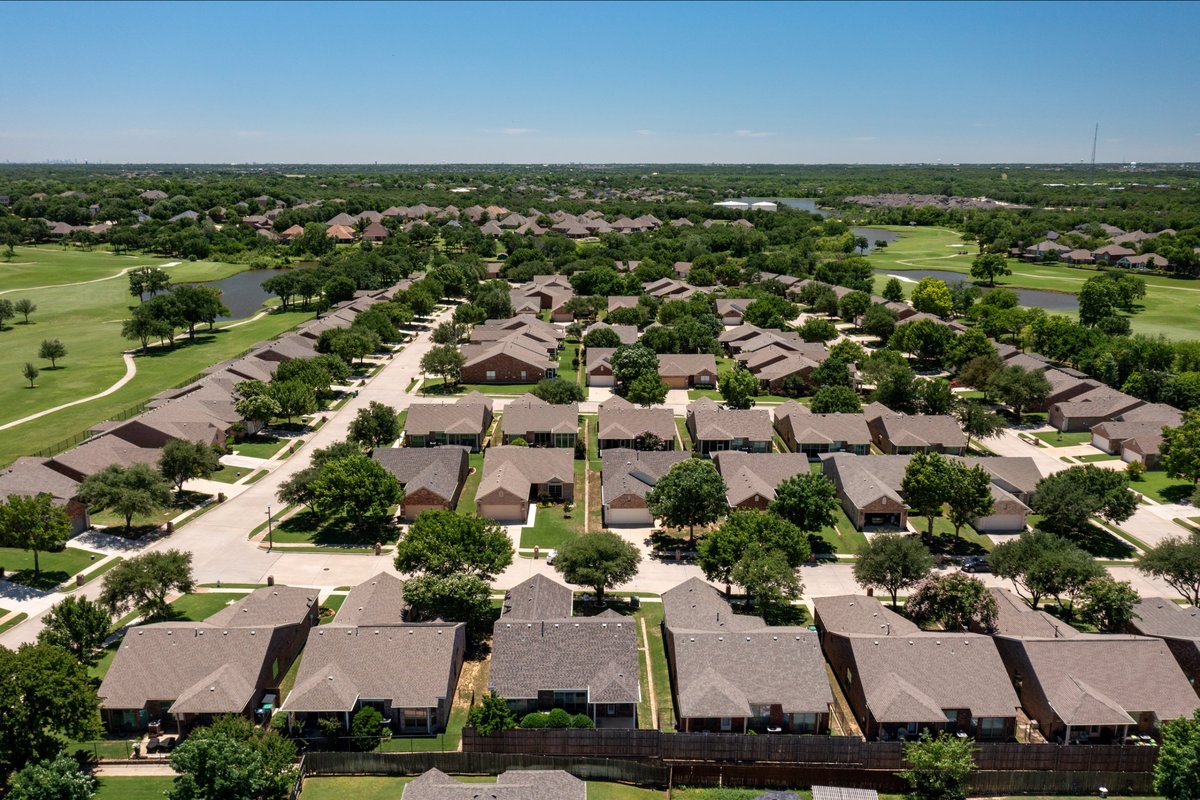
- Resale homes: About 136 single-family homes were listed in Corinth on October 15, 2026, with an average list price near $500,000, based on live MLS data. Many are 1990s and 2000s homes in neighborhoods like Oakmont Country Club Estates and Lake Sharon Estates. With these, the money you ask for often has to cover repairs from the inspection too, so we plan the whole request at once.
- New construction: About 39 of those Corinth listings were new construction, most in Oak Ridge Park, averaging about $478,000. Across Denton County, roughly 1,350 new homes were for sale. Builders often offer buydowns through their own lender. Those can be good deals, but compare them with a quote from an outside lender, and read the fine print on whether the rate is temporary. Our Denton County new construction guide explains how to bring us along at no cost to you.
- Know the comps before you ask. Texas is a non-disclosure state, so sale prices are not public record. Our Corinth market report shows what is for sale and under contract right now, and we can pull recent sold prices for nearby homes from the MLS for you. Our Oakmont Country Club Estates guide breaks down each Oakmont neighborhood in Corinth and Denton.
For the bigger picture on getting started, see our guide to buying a home in Denton County.
Frequently asked questions
What is a 2-1 buydown?
A 2-1 buydown lowers your mortgage rate by 2 percentage points in the first year and 1 point in the second year, paid for upfront, often by the seller or builder. From year three on you pay the full note rate, and lenders qualify you at that full rate.
How much can a seller pay toward my closing costs in Texas?
It depends on your loan, not the state. For a conventional loan on a home you will live in, Fannie Mae typically allows sellers to contribute 3% to 9% of the price, depending on how much you put down. FHA, VA and USDA loans have their own limits, and your lender can tell you yours.
Is a price cut or a rate buydown better if I plan to refinance?
Usually a price cut. Discount points often take around five years to pay for themselves, so if you refinance sooner, much of that money is lost. A lower price keeps your loan smaller no matter what rates do.
Are Denton County sellers agreeing to concessions right now?
Many are. In September 2026, 2,016 Denton County listings had a price reduction, close to half of the 4,421 homes for sale, according to Realtor.com data. Every seller is different, so the right ask depends on the home and how long it has been listed.
This post explains how price cuts, buydowns and seller credits generally work in Denton County as of October 2026. It is general information, not an offer of credit or a loan quote, and not lending, tax or legal advice. The Airheart Realty Team is not a mortgage lender. Talk with a licensed lender about your options, and with a tax professional or attorney about your situation.
Found a home and wondering what to ask for? Schedule a free buyer consultation. We will talk through your budget, timing and options, then help you build an offer that puts the seller's money where it does you the most good.
Have a question you want us to answer? Send it to us. Your question could be our next post.
Photo credits: header photo by Jakub Zerdzicki on Unsplash; Greens of Oakmont aerial from one of our Airheart Realty Team listings. Rate data: Freddie Mac Primary Mortgage Market Survey. Builder incentive trends: HousingWire, August 2026.


:format(webp):quality(80)/u.realgeeks.media/airheartrealty/julie-steve-airheart-team-2026.jpg)